09/10
We have continued to discuss the topic
2. TEACHING TOOLS IN THE ENGLISH LANGUAGE CLASSROOM
2.4. Songs
WHY TEACHING WITH SONGS? by Larry M. Lynch
Language teachers can and should use songs as part of their classroom teaching repertoire. Songs contain authentic language, are easily obtainable, provide vocabulary, grammar and cultural aspects and are fun for the students.
They can provide valuable speaking, listening and language practice in and out of the classroom. Some key reasons songs can work exceedingly well in the foreign language classroom include the following:
- Songs almost always contain authentic, natural language
This often contrasts the contrived, stilted language found in many student texts. Of course songs can also go to the other extreme by using overly crude, foul or otherwise objectionable language. With careful screening, an extensive library of usable songs for language learning can be compiled. - A variety of new vocabulary can be introduced to students through songs
Looking to boost student vocabulary with useful phrases, vocabulary and expressions? Songs are almost always directed to the native-speaking population so they usually contain contemporary vocabulary, idioms and expressions. - Songs are usually very easily obtainable
Cibemba and Silozi non-withstanding, songs are usually not that difficult to obtain. Local sources may be available including the students themselves. There’s always the internet which can connect you with song downloads in all but the most obscure languages. - Songs can be selected to suit the needs and interests of the students
In English especially, so many songs are available that selection of songs with suitable themes, levels and vocabulary is not at all difficult. Allowances can also be made for complexity or simplicity of language, depending on the students, by selecting and using suitable songs. - Grammar and cultural aspects can be introduced through songs
Most if not all songs have a recurring theme or story. So excerpting cultural elements is usually a possible, but often overlooked aspect of using songs. I still use “Hit the Road Jack” sung by the late Ray Charles to illustrate spoken contractions. He uses spoken contractions is virtually every line of the song. - Time length is easily controlled
Whether you have an hour, 30 minutes, or only 15 minutes or so, a song can be used in the course of a planned lesson. Use of songs is very flexible. - Students can experience a wide range of accents
A good thing about songs is that you can expose the students to many different kinds of English. British English, American English, Caribbean English are all widely available through songs. Accents too are well represented by songs from different regions and in a variety of types and formats. Gospel, soul, R & B, Pop, Rock, Reggae, Jazz and other styles change not only accents, but vocabulary and usage too. - Song lyrics can be used in relating to situations of the world around us
Songs have been used as vehicles of protest for civil rights, workers’ rights, even prisoners’ rights along with an untold number of other causes. They’ve expounded on pollution, crime, war and almost every social theme or cause. We won’t even mention how many songs are about, related to or explore the theme of sex. - Students think songs are natural and fun
Well actually they are, aren’t they? Fun, even silly songs abound in English. Some singers actually made a career out of them. (Ray Stevens, anyone?) They make offbeat, fun changes of pace with classroom use.
These are only some of the many reasons songs are useful in the language learning classroom. They contain authentic language, are easily obtainable, provide vocabulary, grammar and cultural aspects and are fun for the students. They provide enjoyable speaking, listening, vocabulary and language practice both in and out of the classroom. So EFL, English as a foreign language, ESL, English as a Second language and foreign language teachers should all consider using songs as a regular part of their classroom activities.
3. LEARNERS CHARACTERISTICS
Individual attention
It is very important that small children get the teacher's individual attention as much as possible. some will demand it by clambering on to your knee or holding your hand, but others need it just as much.
A good opportunity to give them individual attention is when they are drawing or colouring. At this point you can go round talking about what they are doing and maybe eliciting some vocabulary. It is often at this point that children will say if anything is worrying them.
Attention span
For the teacher used to an older age-group it can be quite disconcerting when a three-year-old wanders off in the middle of a song or story to play with a toy. It does not mean they are not following what is going on; it is probably because some other child had the toy before and they see this as their only opportunity to get hold of it. We must not take it as a personal rejection. It is very difficult to hold the attention of a whole group of small children and the best way to do it is to ring the changes every five to ten minutes-unless you see that they are all really absorbed in what they are doing, in which case you can let it go on a bit longer.
It is a good idea to make a note of the things they really enjoy and which you know will get the attention of the whole group. This age-group love what is familiar and may seem indifferent to something new. By this we do not mean that you should never try anything new. On the contrary, what is new in one lesson has become familiar by the second lesson. Do not be put off when children do not readily accept an activity the first time; it is worth persisting with something you feel they will eventually like.
The 'silent period'
It is important for the language teacher to remember that young children may spend a long time absorbing language before they actually produce anything. It is not a good idea to try to force them to speak in the target language as this can create a lot of emotional stress. Even if small children are not actually saying anything, they will still be taking it in. Some children say nothing at all in class but go home and tell their parents what they have learnt. By doing repetitive songs, rhymes, games, and plenty of choral work, children will be able to produce language without the stress of having to speak individually.
Pre-school teaching
There are certain advantages in teaching the pre-school age group. One of the main bonuses for the teacher is that there are usually no strict syllabuses to follow, no tests, and no performance objectives to be met. Anything the children learn is a gain and this absence from pressure means that the classes can be an enjoyable experience for both teacher and pupils. Things do not need to be rushed and if the children enjoy a particular activity, it can be repeated over and over again.
Another advantage is that children of this age are less inhibited. They are not afraid to be imaginative and they are not yet bound by the constraints that demand that adults be logical. As they are so young, they are not carrying any negative attitudes left over from previous school experiences. They are curious about everything, keen to learn, and very receptive. There are, of course, some difficulties to be faced when teaching very young children. They can be selfish and uncooperative. If they want something, they will push another child over to get it and show little concern for the other child's feelings. Some of them will use temper tantrums to try and get their own way, and may scream or bite. Some may need help with going to the toilet and there could be occasional accidents with incontinence.
If a child seems withdrawn, bad-tempered, or upset, talk to the parents (or to the class teacher if this is not possible). Very young children can be strongly affected by events at home such as a new baby or moving house.
Needless to say, an enormous amount of patience is needed and some days you might get the feeling you have hardly taught them anything because it t ar taken so long to organize them. However, if you have been using English, they will have been learning even if you have not done a single thing on your lesson plan.
4. REFLEXION ABOUT LANGUAGE ACQUISITION

What is the best age for learning another language?
Folk wisdom has it that the earlier a child starts learning a new language the better, and often, from their own personal experience, parents can see the advantages of learning a language from a very young age. There is the perception that children's brains are more elastic and open, since they appear to be able to pick up languages from birth onwards.
Evidence to support this belief is often based on studies involving immigrant families. In all likelihood, it is the youngest members of an immigrant family that will succeed in adapting perfectly to the new language environment. It usually takes them just a couple of years to develop nativelike competence in the new language, and they seem to assimilate with ease the culture of the target country. Meanwhile, learning the language of their adopted country seems a much more frustrating process for their grown-up relatives. The older they are, the greater their chances of failing at becoming fully-functioning members of their new speech community.
But what about children learning a new language in a more formal environment, in other words, not as immigrants to a country where the language is spoken but in their own country, in kindergartens or pre-school groups? These groups are embedded in a different language, culture and environment from the new language the children are learning. That is a different story altogether. Recent studies have challenged the idea that very young learners have a cognitive advantage when it comes to learning another language in these circumstances. These studies cast doubt on the widely-held belief that one or two lessons a week can replicate the immersion experience of immigrant children, and can lead to comparable learning outcomes. Nevertheless if language learning is integrated into the overall curriculum and carried out as naturally as possible, it can have positive effects on children's attitudes to learning English in their subsequent education. This makes an important contribution to their lifelong learning.
Is there a critical period for language learning?
The observation that young children are at ease with learning languages, while teens and adults often struggle to achieve a good level of proficiency in a new language, led to the development of the so-called Critical Period Hypothesis (CPH). The hypothesis claims that the best period for learning a foreign language is between the ages of approximately 2 and 12, and that due to neurological changes, humans are unable to learn a foreign language to native-speaker standard after the onset of puberty.
Intensive research has been carried out on the CPH since it was first proposed. Although scholars agree that age has an influence on language learning, there is no agreement on whether a critical period exists, or on how age actually influences language learning.
An alternative hypothesis is that there is not just one but several critical periods for learning language. This is due to the fact that linguistic competence consists of various aspects, only some of which are difficult to acquire as we become older. According to this view, input on the syntax and phonology of language needs to be provided before a certain ‘door' in a child's brain closes. However, the successful acquirement of other aspects of a language, such as lexis and rules governing word formation (known as morphology), may be less dependent on age factors. This hypothesis goes some way to explain why adults are likely to be able to learn quite complex vocabulary, while other areas of the language (such as grammar and phonology) may cause them problems.
Of course, there are examples of adult learners who do not manage to build up a solid lexicon in the target language, or who have problems with morphology. Although this can often be explained by the learners' mature age and subsequent memory loss, there may be other reasons unrelated to biology, such as limited input, insufficient motivation, and time commitments to work, family and so on.
Finally, it should be noted that despite differences in their rates of learning, both children and adults who are learning a second language make many of the same omission, substitution, and misplacement errors that occur in the acquisition of their own language. These errors are a normal part of the developmental process and occur in first language development as well as in second language development. Errors, therefore, should be viewed less as evidence of failure and more as indicators of development.
Can only children acquire perfect pronunciation in a second language?
Although there are some well-documented cases of adults who started to learn a foreign language in upper secondary school or later and managed to achieve the performance level of native speakers, this proficiency in pronunciation seems to be a fairly exceptional phenomenon amongst adult learners. A number of empirical studies confirm what teachers of young learners have frequently observed: children are usually more successful in learning the pronunciation of a new language than adults.
Should very young learners be taught reading and writing in another language?
When we teach English to very young children, we naturally concentrate on speaking and listening skills. But what about reading and writing? Although they are often considered skills better left until later in education, there are some important issues to keep in mind when deciding if you will include literacy development in your class.
We communicate and share a wealth of information through the written form of language. Our environment is filled with text: on the streets where we live and shop, on the packaging of the products we buy and the books, papers and screens we read. The reasons for reading and writing are many and varied, but at the heart of it all is communication.
Children are surrounded by text in a similar way. Even before they are reading or writing, they are involved in ‘literacy events’, such as sending a birthday card to a friend, helping to make a shopping list, watching the opening titles of their favourite cartoon or being read to from a picture book. And in this day and age, the text that surrounds children is often English.
It stands to reason that children are in general comfortable with seeing symbols, words and signs that they have not yet learned to decipher. There is no reason why their English classroom should not reflect the real world by also being a text-rich environment. Labels on supplies (pencils, glue, paper), signs (Story corner; What's the weather like today?) and project titles (The life cycle of a frog; Recycling) are a great way to indicate different areas, routine activities and current topics without putting pressure on children to actually understand the words themselves.
What we are providing is a comfortable and safe environment that includes English text. We also do this when we read to children from story books with pictures or let them look through books in a reading corner, or when we play videos of songs with words and sentences appearing on the screen. What this kind of exposure does not provide, however, is an understanding of the relationship between the English alphabetic symbols and the sounds they most often represent.
The explicit teaching of the relationship between letters and their sounds has become more common in the very young learner's classroom these days and, if done in the spirit of play, it can add significant information to children's early literacy development. It provides them with some understanding of the process of reading and gives them practice in saying and hearing the phonemes more clearly. There is some evidence that learning the sounds at the beginning and ends of words also helps children to understand the spoken language, since they can break a sentence down and hear the individual words through a process known as edging’. Finally, many children are very keen to read, and it is a shame to hold them back when they are ready to do so.
The most important thing to keep in mind is that learning to read and write should be a pleasurable experience, full of fun and games. It should never be thrust upon the child as a test of their adequacy in the classroom. Children's first attempts at decoding words (even if they are heavily supported by accompanying images or if they are largely the result of learning something by heart), together with the first wobbly marks they make on paper, should be celebrated as a step towards a literate and independent future.
5. OUR EDUCATIONAL VISION OF TEACHING ENGLISH TO VERY YOUNG LEARNERS
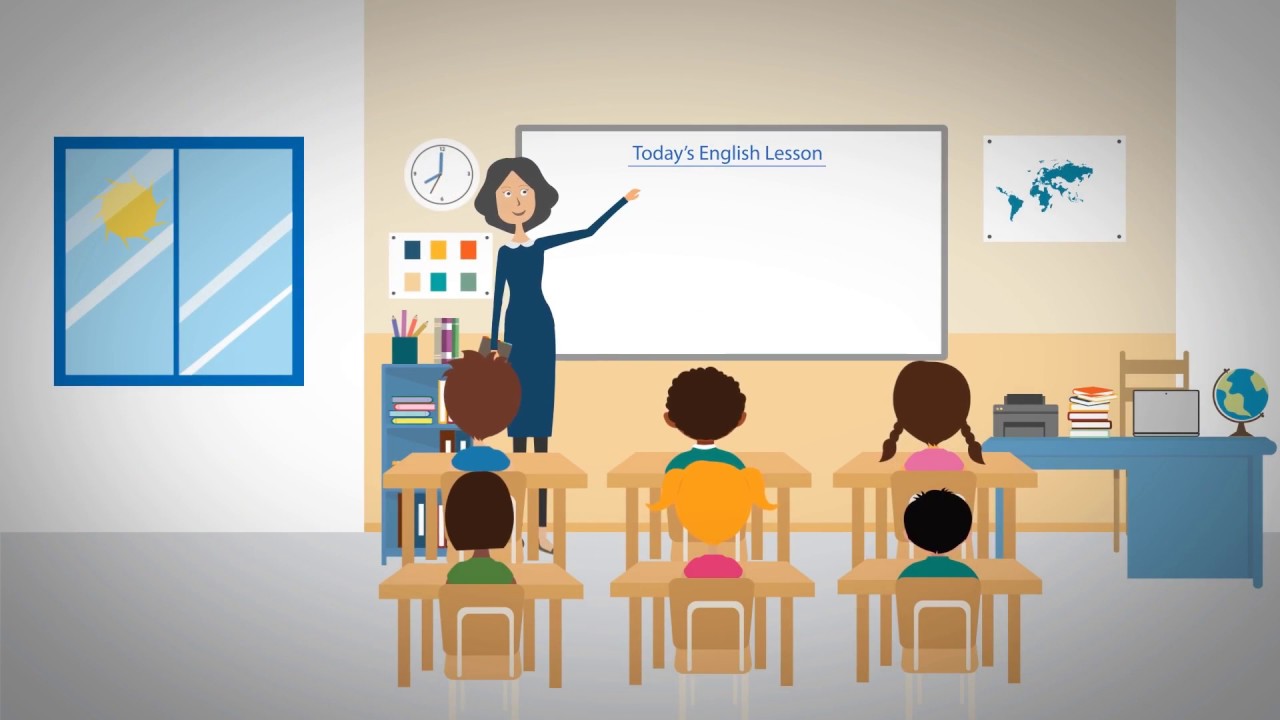
How can we create the best learning environment for the very young?
Below you will find seven prerequisites for an optimum language learning environment:
1. Teaching time and teaching quality. An early language programme that aims to facilitate successful language acquisition requires intensive exposure to the language, and this requires time. But even if time is limited, the language learning experience can still be motivating for the learners; the quality of the learning experience can be optimized to ensure maximum engagement and interaction in the classroom.
2. A teacher with an excellent command of the target language. The teacher must have the ability to talk to children in a natural way, and to adapt his or her language to the children's needs. This requires great flexibility in the target language.
3. A teacher with an innate understanding of how young children learn in natural ways. This kind of empathy with the learner is important in any kind of educational context, but we believe it's essential for teaching early learners.
4. A methodology that engages the learner as a whole person through multi-sensory learning processes. This means that the children do not just watch and listen to the teacher presenting the new language, and later repeat what they have learned. They engage with the language through touch and movement at the same time as they are using their sight and hearing, as, for example in Total Physical Response activities. In such a classroom culture, learners will remember better what they are learning. No time is wasted on explicit grammar explanations.
5. The right level of challenge. In a learning culture, the level of challenge must be in proportion to the learners' prior knowledge and the skills they already have. In such an environment, learners are, at times, pushed to the limits of their present competence.
6. Meaningful tasks, which engage learners emotionally and can contribute to their cognitive development.
7. A teacher who can speak the learners' own language proficiently. If all the learners share a first language that is different from the teacher's, the teacher needs to speak their language, so that they can both anticipate comprehension problems and provide on-the-spot support, should problems occur.
How can we make the teaching of English to very young learners effective?
An effective approach to the teaching of English to very young learners will be based on a number of key building blocks or principles of teaching. The seven principles below serve as the underlying framework for the activities in the main part of this book. They are reflected in the methodology, the teaching techniques and the strategies suggested in the activities.
1 Develop thinking skills.
According to Vygotsky's approach to early childhood education, children learn how to use tools of the mind from adults. But the tools are not just handed down-they need to be facilitated, or ‘scaffolded' in the shared social space between adult and child. The early language learning classroom is an ideal place for this development of thinking skills.
If, after a TPR (Total Physical Response) activity, four-year-old Olivia starts rolling around on the floor while the rest of the class is standing in a circle waiting for instructions from the teacher, Olivia doesn't yet have the right cognitive tools to help her focus on the task. So the teacher will now help her focus (through scaffolding), by pointing at other children and saying, for example, Look at Emily. She's standing still. Look at Emma. She is standing still. And look at Freddie. He is standing still, too. And now look at yourself. You are standing still, too. Very good, Olivia. Very good. We're all standing still.
What happens in the shared space between teacher and learner will become automatic after some time, but the teacher's role in that process is vitally important. He or she observes the child and models the behaviour required as the next step in their development. The teacher uses gestures, symbols, images, gentle touch (culture permitting), and so on, to mediate or remind the child of the desired behaviour. Children that get such support regularly will gradually learn to do independently and confidently the things they could only initially do with help from an adult.
In the example of classroom language above, the teacher facilitates a child's insight into the kind of behaviour that works best in a certain situation. In similar ways, we can help children make more of the cognitive resources they bring to the classroom. Based on the belief that ‘what a child can do with help today they will be able to do independently tomorrow,' we can help children become familiar with important concepts such as number, size, shape and space, and gradually help them build a coherent model of the world.
2 Provide optimal input.
Since the written representation of the new language is less accessible to very young learners, sound is extremely important and attractive to them. At this age a great deal of language learning takes place through oral and visual activities – stories, songs, chants, rhymes, images and realia – and through gestures and movements, including games with simple rules.
As mentioned earlier, there is clear evidence that children learn a new language best when they are immersed in it; that is when their parents have emigrated to a new country and the children learn the language from their environment of friends, neighbours, teachers and others using the language naturally. Schools can never totally emulate such a situation. However, we believe that it is possible in non-immersion educational contexts to create conditions that turn language learning for very young learners into a meaningful and successful activity.
Our belief is based on personal experience, and on teaching we have seen in pre-schools in many countries around the world. Admittedly, this quality of teaching, where children often have ten or more hours of English a week, is more often found in private pre-schools or kindergarten language programmes than in state educational contexts.
The way the teacher interacts with the children is crucial to how they learn to interact in and with the new language. In order to make the language learning experience as meaningful, enjoyable and natural as possible, teachers need to adapt the language they use to talk to their pupils in such a way that it becomes comprehensible. This requires the teacher to develop an ability that we often observe in parents, grandparents or other adult family members talking to very young children in their own language. They intuitively seem to get it right, so that children can understand them. It is a way of talking which is sometimes known as ‘motherese’ or ‘caregiver talk', and it is a tactic that many of us adopt when talking to people who are less competent than we are: we use what is often called foreigner talk.
However, modified interaction need not always involve linguistic simplification. It may include elaboration, slower speech rate, using gesture and providing additional contextual cues such as images or realia. There are various other examples of teacher strategies which modify input, such as checking comprehension, clarification of requests and self-repetition or paraphrasing.
3 Go beyond an input-output model of learning.
Children love imitating what they see and hear, and imitation is a first important means of getting children to speak. Learning a language successfully, though, is not just about the children parroting what their teachers say. Using a language successfully is about being creative with it - and we can help learners make first steps towards this by going beyond a mere input-output model of learning.
Parents often measure the quality of their children's language learning by the amount of language they are able to produce. Small wonder then, that teachers want to get children to learn to speak the language as soon as possible, first by imitating what they hear and then by gradually learning to say things that they want to say for themselves.
Children will love imitating anything that engages them emotionally. Hence, the capacity of the input to grab their attention is vital. For example, if children love a story they hear their teacher tell, or the character voices they hear on an audio recording of a story, they are more likely to start speaking along when the teacher next revises the story with them. Likewise, a catchy tune or the rhythm of a cool chant will help children remember important chunks of language more easily, and they will love singing or saying the words themselves.
Another key point that helps young children to develop their speaking skills is that they are often chatterboxes and they love to engage in small talk. In both child and adult conversation, small talk is fairly predictable (for example, How are you? I'm fine, thanks.). In other words, in small talk situations, speakers often use ‘formulaic' or 'prefabricated' language, rather than creating utterances by putting them together word by word. So, if the teacher regularly engages their pupils in small talk in the target language, they learn to pick up important chunks of language, and gradually learn to be ‘chatty' in a very natural and useful way. And not just in the target language: some children will transfer this valuable skill to their own language, helping them become more sociable and balanced individuals.
Quality of input plays an important role in the teaching-learning process, but in order for the learning to be successful we need to look beyond an input-output model. We need to investigate the physical and social dynamics of the very young learners' classroom on the grounds that learning is not simply a cognitive process but is situated in its social context, and is physically 'embodied' through gesture, voice and movement. According to this view of language learning, we need to broaden our focus and take other factors into consideration: factors which can be defined as embodiment, embedding and extension. We need to look at how teacher and pupils are organizing their interaction using gestures, rhythm, body movements, and even teaching materials in tandem with their spoken language.
The following is an extract from a lesson in a pre-primary class of three and four year-olds that Herbert had the pleasure and the privilege to observe at the ABC private language school in Hong Kong: The teacher is pointing at a picture in a book. It shows a smiling girl, with an apple and a piece of cake in front of her.
Teacher: Look at the girl here. (The teacher points at the picture.) Is she happy or sad?
Children: Happy!
Teacher: She's so happy! Do you think she likes apples?
Children: Yes.
Teacher: Yes, yes, yes! (The teacher is speaking rhythmically, using her hands to support the rhythm of the language with a circular movement.)
Do you think she likes cake? (The teacher repeats the hand gestures.)
Children: (Some children are mirroring the teacher's hand gestures.) Yes, yes, yes!
In fact, there is very little language production' in this scene of embodied interaction. The children are basically reacting to what the teacher says by echoing her words. But it is through the way the teacher uses gestures and body movement, and through the way the pupils mirror her behaviour and echo her language that they ‘co-construct the interaction in the classroom. The teacher prompts the learners' first reaction (Happy!) by pointing at the picture and asking whether the girl is happy or sad. She has introduced the word happy in a previous lesson but assumes that her pupils will not yet be able to recall it, so she has decided to scaffold the pupils' language by offering them a choice of two possible answers (Is she happy or sad?). This strategy allows her pupils to say more in the target language than they would be able to without the scaffolding.
This is what follows, and again an analysis of the interaction should focus on the multi modality of the situation, not the language alone:
Teacher: OK, let's listen to the song first. (While the teacher is about to start the CD, one of the children stands up and tries to go past the teacher towards the free space in front of the board.)
All right, Linda, can you sit down again, please?
Linda: No!
Teacher: (laughing) No?
(Linda laughs too, and carries on moving towards the space, swaying slightly.)
Teacher: Ah! You want to dance. (The teacher mimes dancing.) Do you want to dance?
Linda: Yes! Dance!
Teacher: Dance. Good girl. You want to dance.
It's fascinating to watch how the interaction unfolds. As soon as the girl notices that the teacher is about to play a song, she gets up and moves towards a free space in the classroom. This is a space the teacher has previously encouraged her pupils to use for dancing while a song was playing.
Although Linda doesn't have the language to let the teacher know that she wants to dance to the music, she firmly says ‘No!'. We can sense how the interaction is embedded in the social space between teacher and pupil.
One key aspect of the interaction is the amount of rapport building that happens through the mutual mirroring of body movement and echoing of language. This assures the learner that the teacher takes her seriously in spite of her inability to fully express what she wants to say. It gives her a sense of being understood by the teacher. It assures her that her teacher is interested in what she wants to communicate, and helps her to succeed in the end. The example above, from a very young learners' classroom, shows the complexity of successful classroom interaction. But in order for such interaction to actually happen, the teacher needs to scaffold it. The teacher must be flexible in the way he or she interacts with her pupils and have a caring and facilitating attitude towards the pupils' learning. The teacher must take their pupils seriously and be able to react to what they say (or what the teacher assumes they want to say), often through oneword sentences or simply the use of body language, as seen above.
4 Teach grammar without teaching' grammar.
There is no point in explaining grammar rules to very young learners. They simply do not have the cognitive capacity to handle abstract concepts, such as verb' or 'adjective”. Neither can they discriminate between tenses, such as ‘present continuous' or 'past simple'. Grammar will evolve naturally for very young learners, just as it has done in their own language, if we create the appropriate conditions in the classroom.
Children learn grammar through hearing, imitating, noticing, remembering and trying to apply language, not through meta-grammatical explanations, as we can see from this extract from a lesson.
The class are doing a simple counting activity with fruit, and they hear the teacher say various number + noun combinations:
Teacher: (The teacher puts an apple on the table.) Look what we've got here: one apple.
Children: One apple.
Teacher: Very good. It's one apple. And now look. (The teacher adds two more apples.) One, two, three.
Children: One, two, three.
Teacher: Very good. Three apples. Three apples.
Children: Three apples. Teacher: And now? (The teacher puts a banana on the table.)
Child: One ...
Teacher: Yes! Good! One banana.
Children: One banana.
The children enjoy this simple activity. Learning to count is fun and their success builds their self-esteem. Gradually, some of them may notice intuitively the use of the plural apples when there is more than one item.
Of course, children learn at different paces: some children won't notice the plural form difference in the activity above when they encounter it for the first time, but they will pick up on it later, for example, in a story or a song. This is why revision and varied input are extremely important in getting children to notice language. The more they hear and grow familiar with a form of input, the more they will want to imitate the language from it and the more easily they will remember language. Then they will gradually notice the features of the material, imitate them and try to use them independently.
5 See errors as a sign of learning.
As teachers, we need to be patient, and aware of the fact that errors are signs of learning. Parents are often proud of the first few longer sentences children produce in their own language, rather than worrying about the mistakes they make. In fact, mistakes children make when they are learning to speak are frequently seen as 'cute'. As natural phenomena of child language, these errors in the first language will vanish with time and further practice.
But how should we react to errors in the language classroom? A good answer would be ‘as naturally as possible". If we understand the child's meaning despite errors, we need to respond to what they say positively and continue with the communication. We should avoid any kind of feedback that might be perceived as criticism by the child, or as an indication that something is ‘wrong’ about the language they have produced. The experienced teacher, perceiving an appropriate moment, will just smile and quietly repeat the correct form. This way, the child may feel like repeating it too.
But the teacher should not make corrections all the time. Nor indeed should children be expected to repeat the discreet corrections that the teacher makes. Young children have a limited attention span, and trying to get them to repeat correct versions of things they have said 'wrongly could become a chore for both teacher and pupils. If you as a language teacher can perceive your pupils' errors as similar to the ones they make in their own language (the cute' mistakes), you will remember that it takes time to develop accuracy, and that you need to give your pupils that time.
Above all we need to ensure that children are not scared of making mistakes in the new language. We have to do everything we can to help them embrace this language-learning-friendly attitude toward errors as an important basis for lifelong learning.
6 Take the child's own language seriously.
It would not be wise or possible to ban the use of a pupil's own language from the young learners' classroom. It might even create stress and stop the learning process in its tracks. Learning draws on previous learning, and children's experiences with acquiring their own language are still fresh in their minds, and form a valuable platform for learning the foreign language. Not understanding anything at all in the classroom can be threatening, so the children's own language can be an important safety net.
However, the challenge for the teacher is to use as much English as possible, and resort to the children's own language in ways that facilitate the learning of the new language. Classroom experience has shown that the following strategies for using both English and the first language work well:
• The teacher rises a "sandwiching' technique. They say something in English while using mime and gesture to help the children understand it, then say the same phrase or sentence in their own language (repeating the mime and gesture), and then immediately repeats the same sentence in English again (yet again repeating mime and gesture). Here is an example:
Teacher: OK, now stand up. Stand behind your chair. (The teacher stands behind her chair.)
Stellt euch hinter euren Stuhl.
Stand behind
Good! And now close your eyes and listen. (The teacher points at her eyes and closes them, then points at her ears.)
Schließt eure Augen und hört gut zu.
Close your eyes and listen. Well done!
• The teacher uses a puppet that can only 'speak English, and repeats what the puppet has said in the learners' own language, if and when necessary.
• There are two teachers in the class. One teacher speaks only English, while the other acts as a mediator, speaking English with their colleague and using the children's own language, if and when necessary.
There is evidence that these techniques are very efficient in getting children to understand what the teacher is saying, especially if the teacher establishes routines by regularly using certain activities and learning processes. This gives children a feeling of security, shows them that they can understand the teacher well, and makes it possible to progressively reduce the use of the children's own language.
7 See the teacher's role as educator and facilitator.
Time spent as an educator (establishing routines, helping learners to focus their attention, and so on), is not time wasted, but time well invested. This is because it helps to improve the quality of interaction in the classroom, gives the learners a sense of security and helps to make learning the focus of the classroom. Observation also facilitates learning because it helps us see our children as individuals with different needs, who are at different stages of the learning process.
One of the key challenges for teachers of very young learners is to help their learners to focus their attention. Children's eyes and ears are everywhere (frequently not where their teacher wants them to be!) and often they can barely sit still at all. They find it difficult to listen to their teacher, and especially to their classmates. When we recently asked a group of colleagues to come up with a metaphor describing how they see their own role in the young learners' classroom, one of them said, 'It's difficult to tell. I love those kids, but quite often I feel like a lion tamer, and sometimes, well, more like a clown ... trying to get their attention through all kinds of tricks.'
Many children are exposed for several hours a day to screens filled with colourful, fast-moving images, accompanied by high-volume digital sound effects. Most educators view this well-known phenomenon critically, yet so-called 'teaching games' and ‘educational TV programmes' for children use those very ingredients to grab children's attention successfully. Once children are used to this kind of sensory bombardment, it will be difficult for teachers to grab their attention without a similar approach. Little wonder, then, that some teachers feel that in order to reach out to their younger pupils they need to ‘sing and dance like Big Bird', as one colleague put it.
If getting your students to focus their attention is an important issue for you too, you will find that this book otters lots of ideas and practical activities to draw on.
Comentarios
Publicar un comentario